
01 · World Anaesthesia Day
Before, during and beyond the procedure
World Anaesthesia Day is observed on 16 October, commemorating the first public demonstration of ether anaesthesia in 1846. In 2026—180 years later—the theme ‘Before, During and Beyond Surgery’ reflects the continuous role of anaesthesia across a patient’s journey.
For emergency thrombectomy, that role is not simply making a patient sleep. It is real-time brain protection during a race to restore circulation.
02 · Cerebral physiology
Anaesthesia is part of stroke treatment
A large-vessel occlusion deprives brain tissue of oxygen. Collateral vessels may temporarily support the penumbra, but sudden low blood pressure, inadequate oxygenation, excessive or insufficient ventilation and procedural delay can reduce that reserve.
The anaesthesia team stabilises the airway and circulation, anticipates physiological changes, manages pain or movement and helps the neurointerventional team work rapidly and precisely.
03 · Before thrombectomy
A rapid assessment without avoidable delay
The team rapidly reviews consciousness, airway protection, aspiration risk, oxygenation, agitation, blood pressure, relevant medicines and major heart or lung disease. The imaging and neurological examination indicate the occlusion site and the amount of threatened, potentially salvageable brain.
This assessment must be focused: anaesthetic preparation should support, not unnecessarily postpone, arterial access and reperfusion.
04 · Anaesthetic strategy
General anaesthesia or monitored sedation?
General anaesthesia provides a secured airway, controlled ventilation and complete immobility. It may be preferable in an uncooperative or vomiting patient, reduced consciousness, posterior-circulation stroke, respiratory compromise or a technically complex procedure. Its potential disadvantages include induction-related hypotension and the time needed for airway management.
Monitored sedation can preserve spontaneous breathing and some neurological assessment and may shorten preparation in suitable patients. However, movement, airway obstruction, hypoventilation, aspiration or an urgent conversion to general anaesthesia can complicate treatment. The safest choice depends on the patient, the stroke and an experienced local workflow.
05 · In the angiography suite
Continuous monitoring while the artery is reopened
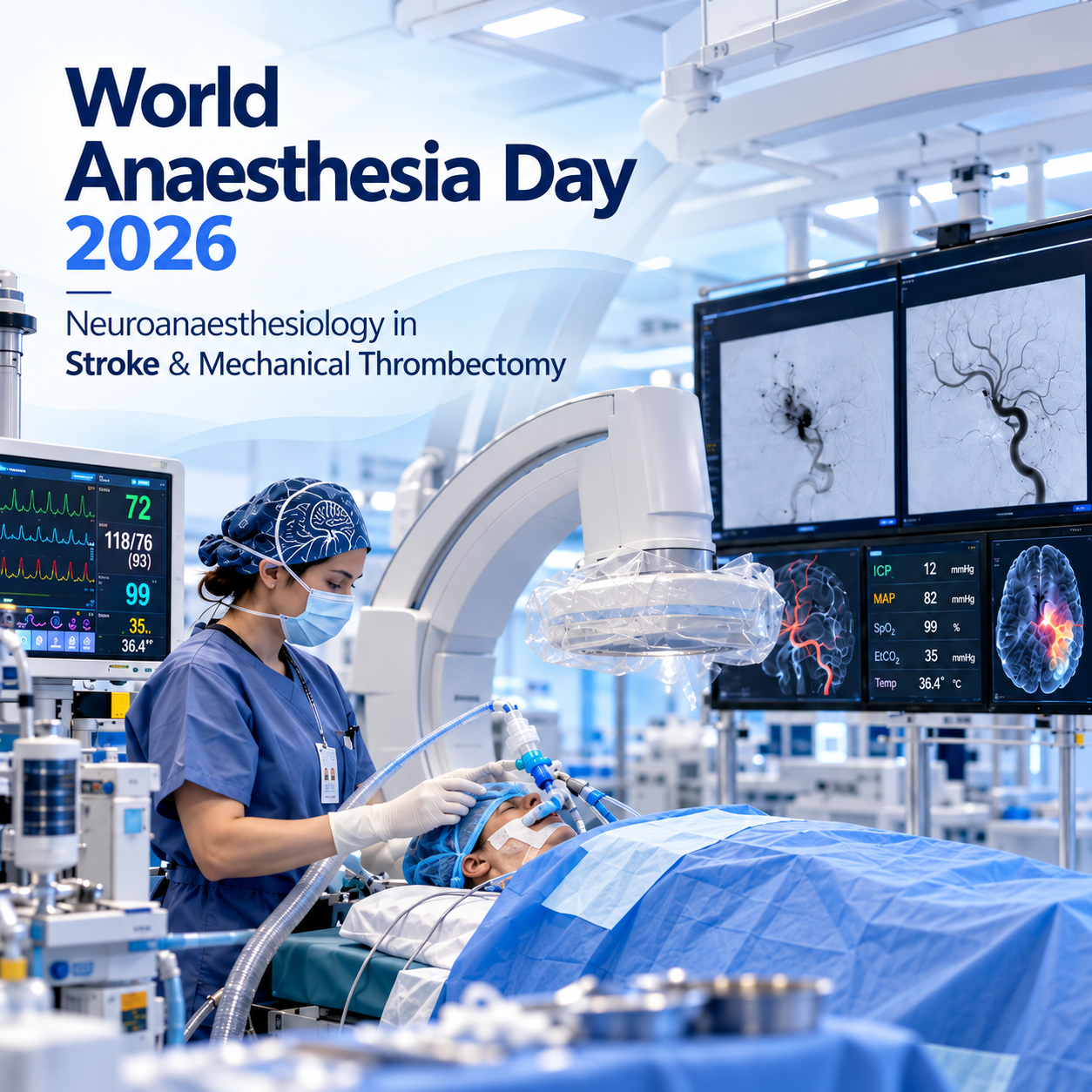
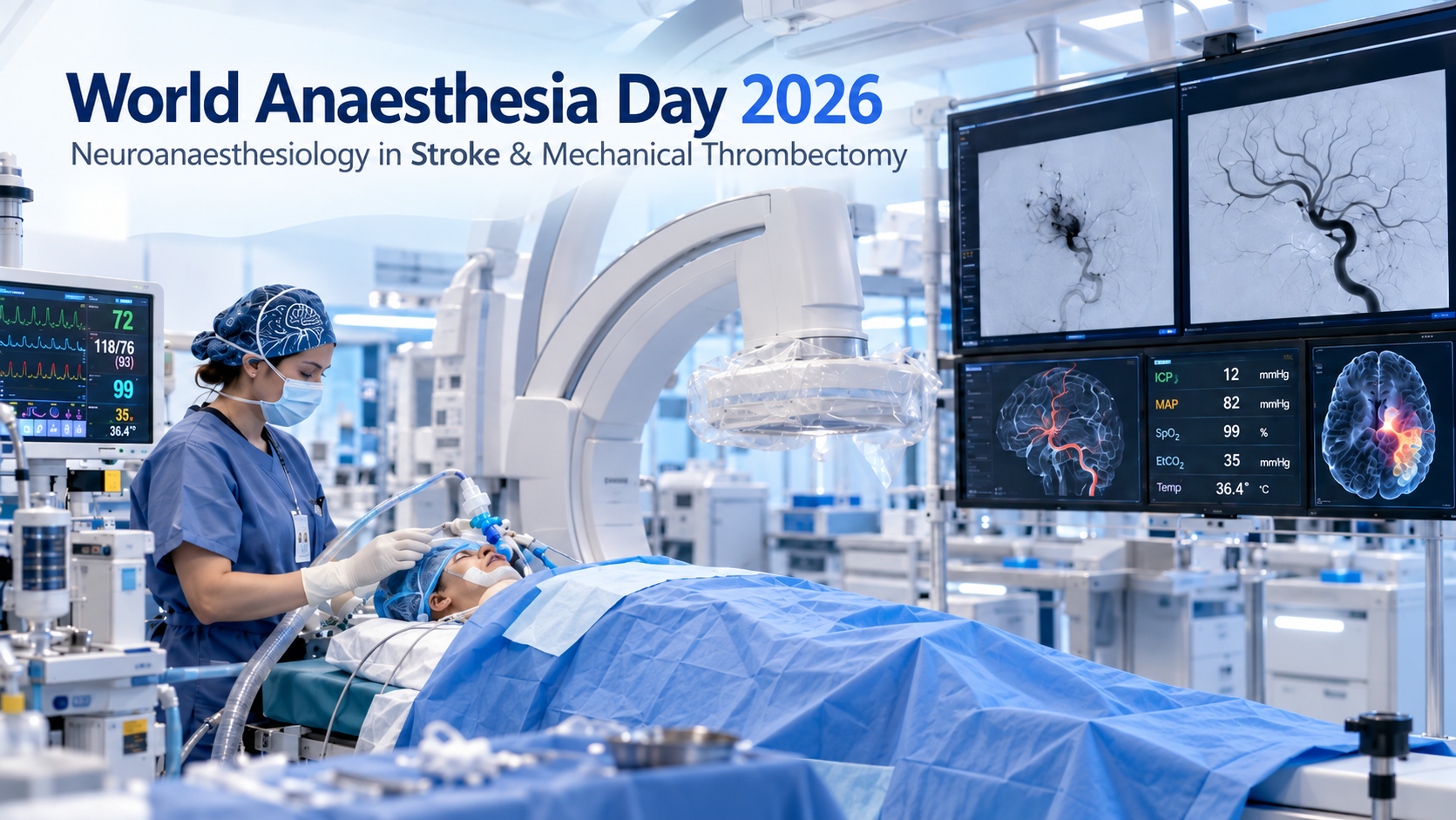
During thrombectomy, the anaesthesia professional remains beside the patient and monitors oxygenation, ventilation, heart rhythm and blood pressure while catheters, aspiration systems or stent retrievers are used to remove the clot.
Close communication links neuroanaesthesiology, interventional neuroradiology, neurology, nursing and radiography. After reperfusion, pressure and medication targets may change according to the achieved flow, infarct burden and bleeding risk.
06 · New evidence
What did the SEGA trial show?
SEGA was a randomized Bayesian trial of 260 patients treated at 10 comprehensive stroke centres in the United States. It compared protocol-based general anaesthesia with sedation during endovascular thrombectomy.
The 90-day ordinal modified Rankin Scale favoured general anaesthesia (odds ratio 1.22; 95% credible interval 0.79–1.87), with an 81% posterior probability of superiority. The probability that general anaesthesia was superior was 89% for functional independence (mRS 0–2) and 69% for successful reperfusion.
07 · Beyond reperfusion
Recovery, extubation and Stroke Unit care
After thrombectomy, the team decides whether immediate extubation is safe or whether continued ventilation and intensive care are needed. Neurological observation, blood-pressure management, repeat imaging, swallowing assessment and treatment of complications continue in the Stroke Unit or neurocritical-care setting.
Good stroke care is a coordinated pathway. Reopening the artery is essential, but physiology before and after reperfusion can also influence the final neurological outcome.
08 · Evidence